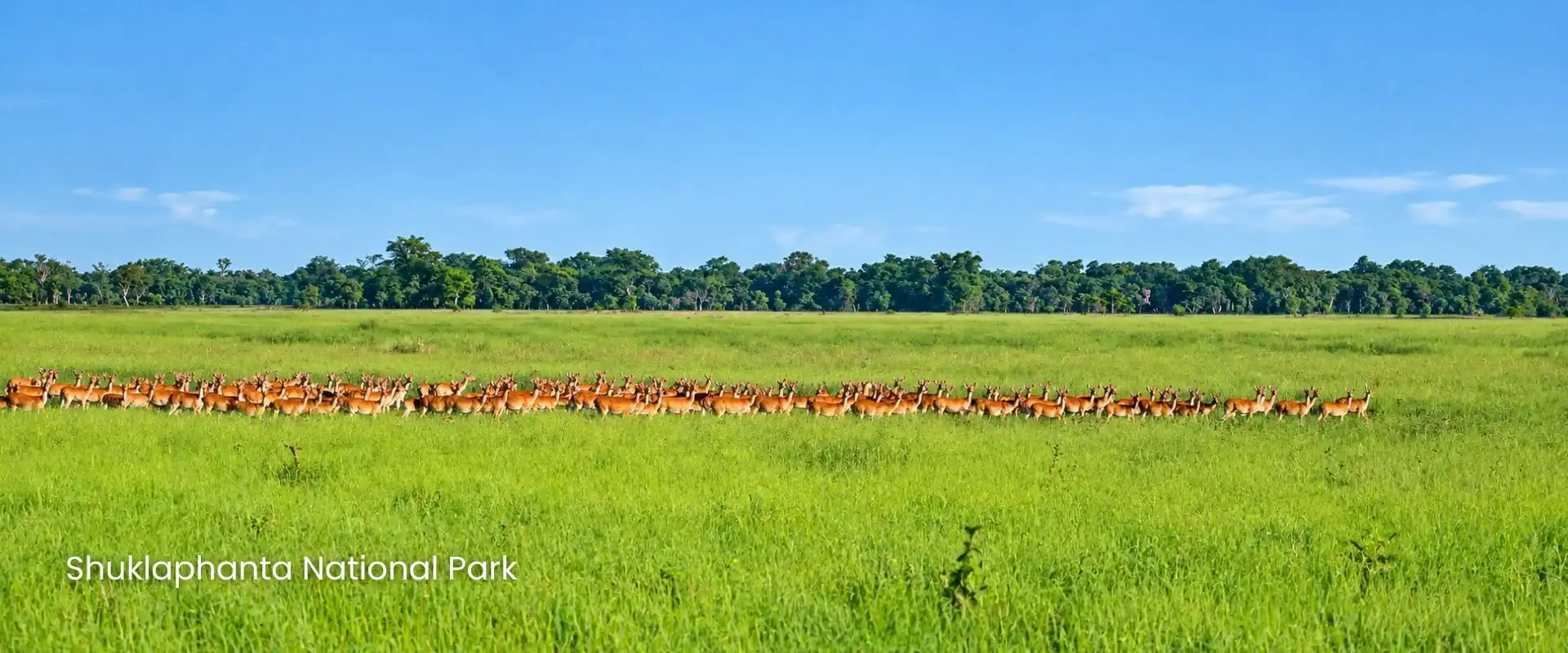
Shuklaphant National Park

Shuklaphanta National Park: Grassland Wildlife in Far-West Terai


Shuklaphanta National Park (also spelled Sukla Phanta) lies in Kanchanpur District in the far-west Terai, close to the Indian border. It protects Nepal's largest stretch of open grassland, together with wetlands, riverine forest and sal woodland. The park is best known for its swamp deer (barasingha), which gather here in some of the largest herds in the world. Tigers, wild elephants, one-horned rhinos, hog deer, crocodiles and more than 400 bird species share the same landscape.


It was a hunting reserve from 1969, became a wildlife reserve in 1976 and was declared a national park in 2017. Compared with Chitwan or Bardia, it is far quieter, so a safari here feels unhurried and wild. It suits wildlife lovers, birdwatchers and photographers who want open views instead of dense jungle.


Quick Facts


Location

Kanchanpur District, near Mahendranagar (Bhimdatta), far-west Nepal

Area

About 305 km², plus a buffer zone

Landscape

Phanta grasslands, wetlands, sal forest, riverine forest

Best time

November to April (peak wildlife viewing February to April)

Suggested stay

2 to 3 days

Key wildlife

Swamp deer, tiger, Asian elephant, one-horned rhino, hog deer, crocodile

Safari type

Jeep safari, walking with a guide, watchtowers, birdwatching


Top Attractions in Shuklaphanta

  • Swamp deer herds: The Phanta grasslands hold the largest swamp deer population in Nepal. Herds of hundreds can be seen in the open, especially in the cool season. Males are most active in the rutting season, around November and December.
  • Tigers and large mammals: The park supports tigers, elephants and a small population of rhinos. Sightings are never guaranteed, but short grass in the dry months improves your chances.
  • Birdwatching: More than 400 species have been recorded, including the endangered Bengal florican, a grassland specialist. Winter also brings migratory birds.
  • Rani Tal: A lake inside the park where you can see wetland birds, deer coming to drink and crocodiles near the water.
  • Watchtowers: Towers over the grassland give wide views of deer, birds and sometimes big cats at dawn or dusk.
  • Rana Tharu culture: Villages in the buffer zone offer traditional food, dance and homestays, a good way to add culture to your wildlife trip.


How to Reach Shuklaphanta

  1. By air: Fly from Kathmandu to Dhangadhi. Some schedules also serve Bhimdatta (Mahendranagar) airport, so check current flights.
  2. By road from Dhangadhi: Drive west along the East–West Highway to Mahendranagar. Allow about 2 to 3 hours depending on traffic and road work.
  3. To the park: The park entrance is a short drive from Mahendranagar, and most lodges are close to the gate.
  4. By road from Kathmandu: Possible but very long, so flying is the practical choice for most visitors.


Best Time to Visit

  • November to February: Cool and comfortable, with good bird activity and the swamp deer rut. Mornings can be foggy and cold.
  • March to April: Warmer, with shorter grass and some of the best chances to spot big animals near water.
  • May to June: Very hot. Safaris are possible but uncomfortable.
  • July to September (monsoon): Rain, flooded tracks and limited access. Not recommended for safaris.


Sample 3-Day Shuklaphanta Itinerary

Day

Plan

1

Fly Kathmandu to Dhangadhi, drive to Mahendranagar, check in near the park, evening village walk in a Rana Tharu community

2

Early morning jeep safari, birdwatching, visit Rani Tal, afternoon watchtower visit and sunset on the grassland

3

Early safari, drive to Dhangadhi, fly to Kathmandu

Have more time? Add a second safari day or combine Shuklaphanta with Khaptad National Park or Api Nampa Conservation Area for a wider Far-West journey.


Stay and Food

Choose from lodges and safari resorts near the park or hotels in Mahendranagar. Meals are mostly Nepali dal bhat, with local Rana Tharu dishes available in homestays and some lodges.


Permits and Fees

  • Nepali citizens: NPR 50 per day
  • SAARC nationals: NPR 500 per day
  • Foreign nationals: NPR 1,000 per day

Permits are issued at Majhgaon, Kanchanpur headquarters.


Travel Tips

  • Travel from November to April for the most comfortable safaris.
  • Wear neutral colours (green, brown, khaki) and carry binoculars and a camera with a zoom lens.
  • Bring warm layers for early winter mornings.
  • Follow your guide's instructions closely, as these are wild animals.
  • Keep voices low and avoid sudden movement near wildlife.
  • Monsoon access is limited, so plan outside June to September.


Plan Your Shuklaphanta Safari with Ghumnajaau

Whether you want a short wildlife break or a longer Far-West Nepal journey, Ghumnajaau can organise your Shuklaphanta safari, from flights and transfers to permits, guides and stay. Contact us to build a trip around your dates and interests.

Customize your own trips with us

We create unforgettable trips, customized for your group.