Call or WhatsApp:
+977-9851333595
info@ghumnajaau.com
Discover a different side of Nepal in Janakpur, where temple courtyards, sacred ponds and colourful Mithila paintings bring the city’s heritage into everyday life. Also known as Janakpurdham, this pilgrimage destination in Nepal’s southern Terai plains is closely associated with Goddess Sita, known locally as Janaki.
In Hindu tradition, Janakpur is revered as Sita’s birthplace and the setting of her marriage to Lord Ram. For travellers, it offers both a meaningful spiritual journey and an opportunity to explore Mithila culture through its art, food and festivals. explore Nepal’s cultural destinations
Come to Janakpur for the striking Janaki Mandir, then take time to explore the city beyond its best-known landmark. Walk between temple squares and sacred ponds, browse local markets, and discover paintings that tell stories of devotion, nature and family life.
Janakpur suits pilgrims, cultural travellers, photographers and visitors looking to experience Nepal beyond its mountain destinations. Allow two days for the main sights and a nearby excursion, with additional time if you want to attend a festival or arrange an art experience.
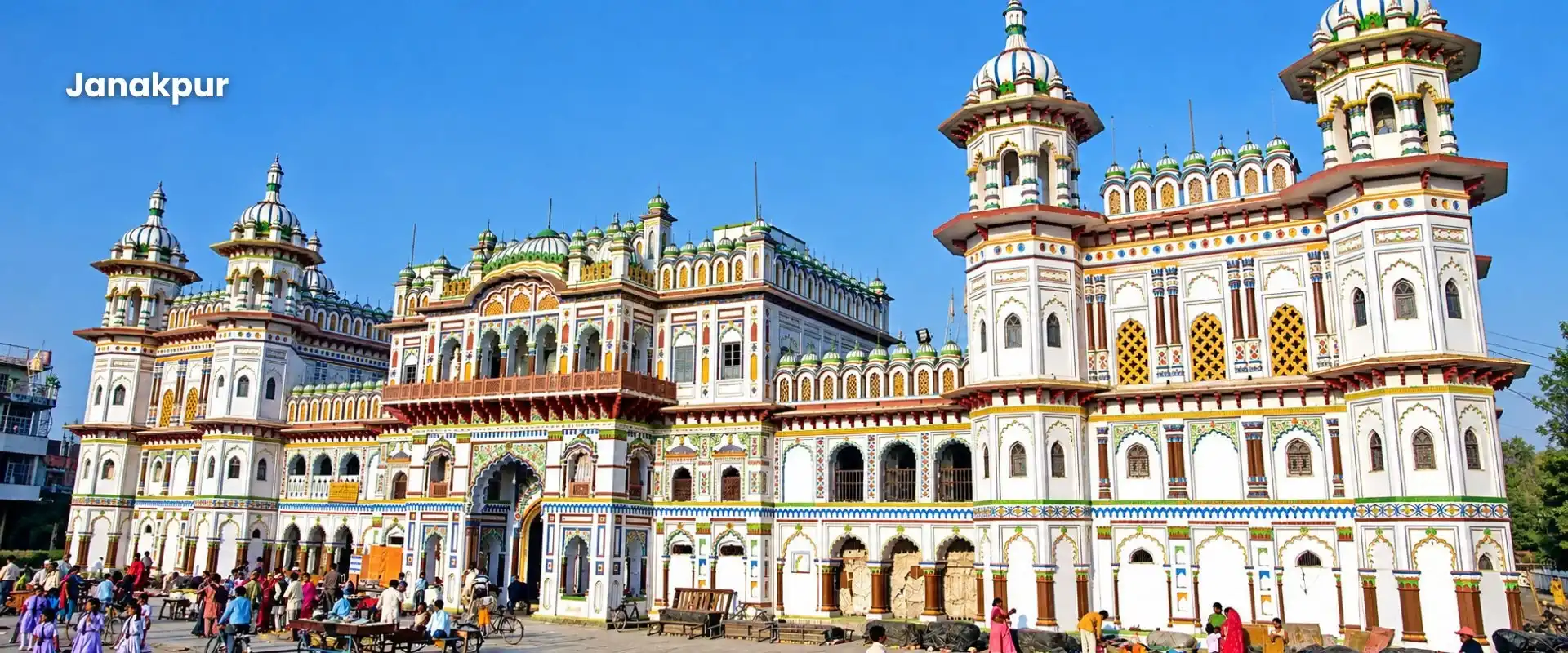
Janaki Mandir is the spiritual heart of Janakpur. Dedicated to Goddess Sita, its white façade, decorative arches and spacious courtyards make it the city’s most recognisable landmark.
Take time to appreciate the architecture and observe the atmosphere of worship. Visit respectfully, follow instructions about footwear and photography, and ask locally about access to inner temple areas.
Continue your visit to Ram Mandir and the nearby Vivah Mandap, associated with the marriage of Ram and Sita. Together, these sites help explain Janakpur’s place in the Ramayana tradition.
A local guide can introduce the stories behind the shrines and explain customs that may be unfamiliar to first-time visitors.
Janakpur’s sacred ponds are an important part of its religious landscape. Ganga Sagar and Dhanush Sagar offer places to pause between temple visits and observe daily devotional life.
Visit in the early morning or towards evening for a more comfortable walk. Ask locally about prayer ceremonies during your stay, and give worshippers space when taking photographs.
Mithila art is one of Janakpur’s most rewarding cultural experiences. Traditionally practised by women, its bold colours and intricate patterns depict deities, plants, animals and scenes of community life.
Look for locally made paintings and crafts, or arrange a visit to an artist’s workshop where available. Buying directly from artists offers a meaningful souvenir and supports the people keeping this tradition alive.
Dhanushadham is a nearby pilgrimage destination connected with the story of Lord Ram breaking Lord Shiva’s bow. According to Hindu tradition, a fragment of the bow fell here.
Include it as a separate excursion from Janakpur, allowing time for transport and a respectful temple visit.
October to March is generally a comfortable period for sightseeing, with cooler conditions than the hot summer months. Winter mornings and evenings can feel chilly, so bring a light layer.
For a festival-focused visit, consider:
Festival dates follow the Hindu calendar and change each year. Confirm dates before booking, and reserve accommodation early for major celebrations.
Late spring and early summer can be very hot. The monsoon generally brings rain from June to September, so allow flexibility for travel during this period.
By Air from Kathmandu
Flying is the quickest way to reach Janakpur from Kathmandu. Direct flights take approximately 25–30 minutes, depending on the airline’s schedule. From Janakpur Airport, continue to your accommodation by local transport.
Check flight availability and departure times for your intended travel date.
By Road from Kathmandu
Janakpur is accessible from Kathmandu by bus or private vehicle. Journey length depends on the route, traffic, road conditions and stops.
Treat the journey as a substantial travel day. Confirm the expected duration and road conditions with your transport provider before departure.
From India
Travellers can approach Janakpur from neighbouring Bihar. Confirm the appropriate border crossing, onward transport and entry requirements for your nationality before planning a cross-border journey.
Walking works well for clusters of central attractions. Rickshaws, auto-rickshaws and hired vehicles can help with longer journeys. Agree on the fare before setting off, and arrange separate transport for Dhanushadham.
Day 1: Temples, Sacred Ponds and Local Markets
Arrive in Janakpur and settle into your accommodation. Begin at Janaki Mandir, then explore Vivah Mandap and Ram Mandir.
Later, walk around Dhanush Sagar and Ganga Sagar before browsing the local markets. If a public evening prayer ceremony is taking place, observe respectfully from the designated visitor area.
Day 2: Dhanushadham and Mithila Art
Travel to Dhanushadham in the morning to explore its religious significance. Return to Janakpur for lunch, followed by a prearranged artist visit or time to browse locally made Mithila paintings and crafts.
Stay another night or continue your journey, depending on your transport arrangements.
This itinerary assumes arrival early on Day 1. Add travel days if coming by road from Kathmandu.
Food is another way to experience Janakpur’s Mithila heritage. Look for meals featuring rice, dal, seasonal vegetables and tarua, battered and fried vegetables. Local sweet shops offer treats such as peda and jalebi.
Ask your host or guide which regional dishes are available during your visit. Choose freshly prepared food and safe drinking water, especially in hot weather.
Beyond its temples, Janakpur’s identity lives in Maithili language, family traditions, paintings and seasonal celebrations. Approach these experiences with curiosity, and ask permission before photographing people or entering private spaces.
Janakpur offers hotels, guesthouses and pilgrim accommodation across different budgets. Staying near Janaki Mandir can make central sightseeing and early temple visits more convenient.
Before booking, check recent reviews, the exact location, bathroom facilities and air-conditioning availability. Rooms near busy temple areas may experience festival crowds and early-morning religious activity.
Book ahead during Vivah Panchami, Chhath and other major celebrations.
What is Janakpur famous for?
Janakpur is famous for Janaki Mandir, its association with Goddess Sita in Hindu tradition, sacred ponds, Mithila art and religious festivals.
Is Janakpur worth visiting?
Janakpur is particularly rewarding for travellers interested in Hindu pilgrimage, Ramayana traditions, temple architecture and living Mithila culture.
How many days do you need in Janakpur?
Two days allow time for the main temples, sacred ponds and a visit to Dhanushadham. Add more time for festivals, art experiences or a slower pace.
Can you visit Janakpur without joining a pilgrimage?
Yes. Cultural travellers can explore Janakpur’s architecture, art, markets and food while respecting religious practices and individual site access rules.
Make time for Nepal’s sacred landscapes and living traditions. Explore Janaki Mandir, discover Mithila art, and build a Janakpur visit around the experiences that interest you most.
Tell Ghumnajaau your travel dates, group size, and interests to discuss a personalized itinerary.
We create unforgettable trips, customized for your group.