Chitwan National Park: The Easiest Way into Nepal's Jungle
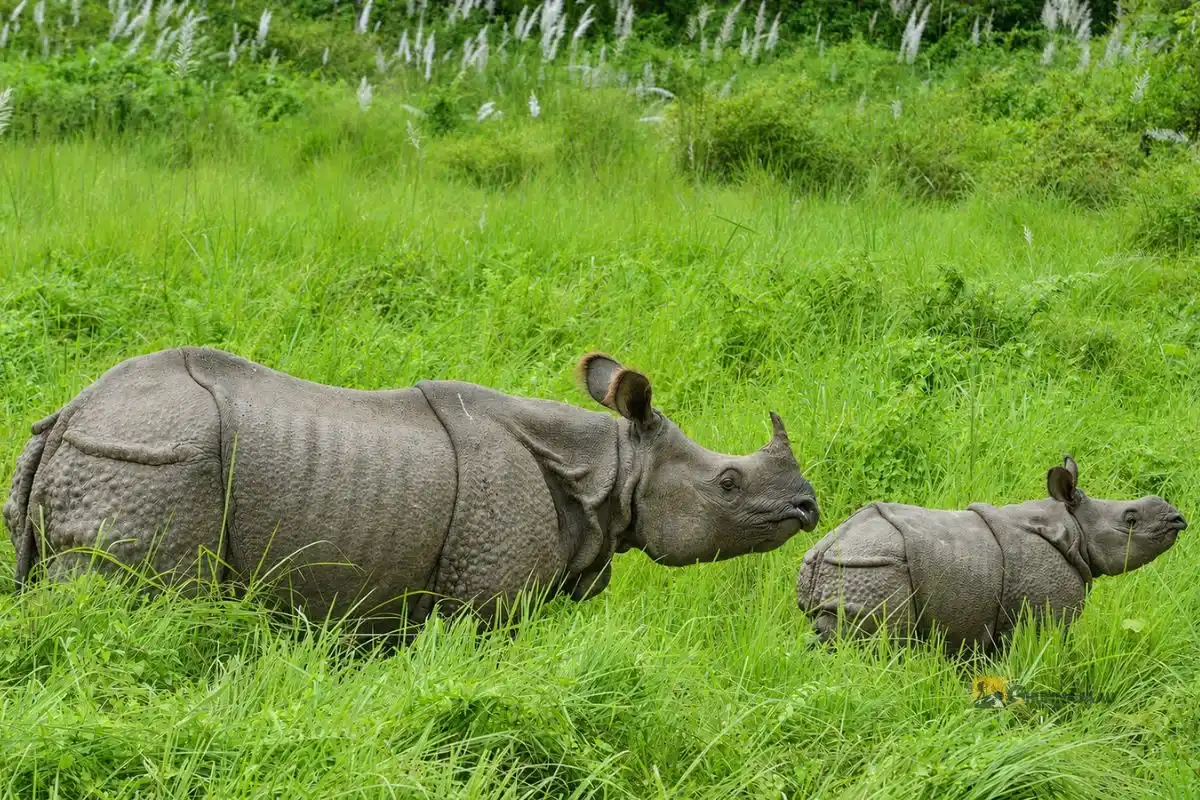
Chitwan suits travellers who want to combine wildlife with Kathmandu, Pokhara or a cultural tour. Its forests, grasslands and rivers support greater one-horned rhinos, deer, monkeys, crocodiles and a wide range of birds. Bengal tigers also live here, though seeing one takes luck.
Typical activities
- Jeep safaris for covering more ground.
- Guided jungle walks for tracks, plants, insects and birds.
- Birdwatching at dawn and late afternoon.
- River or canoe excursions where permitted and operating.
How long to stay: two or three nights lets you spread activities over several mornings and afternoons instead of rushing everything into one day.
Good to know
Bardia National Park: For a Longer, Quieter Wildlife Stay
Bardia, also written Bardiya, is in western Nepal. It suits travellers who want wildlife to be the centre of the holiday. Forest and river landscapes here are home to Bengal tigers, rhinos, elephants, deer and crocodiles.
Guided walks, jeep safaris and birdwatching offer different ways to explore. Access commonly involves travelling to Nepalgunj and continuing by road, so allow for the journey time.
Bardia rewards patience. Several safari days give you more chances to watch behaviour, read tracks and enjoy birds and smaller animals, and they give your guide flexibility when conditions change. A tiger encounter is always a possibility, never a promise.
Explore more: Bardia National Park guide.
Koshi Tappu Wildlife Reserve: Wetlands and Birdwatching
Koshi Tappu in eastern Nepal is the top pick for birdwatchers. Its wetlands, grasslands and river channels attract resident and migratory birds, and wild water buffalo, locally called arna, are another highlight. Nepal Tourism Board lists October to March as the main visiting season.
A specialist bird guide helps with calls, similar-looking species, and seasonal changes. Bring binoculars, leave time for quiet observation, and share your target species before you book.
Explore more: Koshi Tappu Wildlife Reserve guide.
Shuklaphanta National Park: Grasslands and Swamp Deer
In far-western Nepal, Shuklaphanta protects broad grasslands, forests and wetlands. Swamp deer are the main attraction, alongside birdlife and other Terai wildlife. The park is part of a wider landscape that connects with habitats across the Nepal–India border.
Shuklaphanta suits travellers building a dedicated far-western itinerary, perhaps together with Khaptad or other remote areas. Allow plenty of travel time and confirm accommodation, guides and safari arrangements before departure.
Explore more: Shuklaphanta National Park guide and Khaptad National Park.
Mountain Parks and Conservation Areas: Wildlife Beyond the Jungle
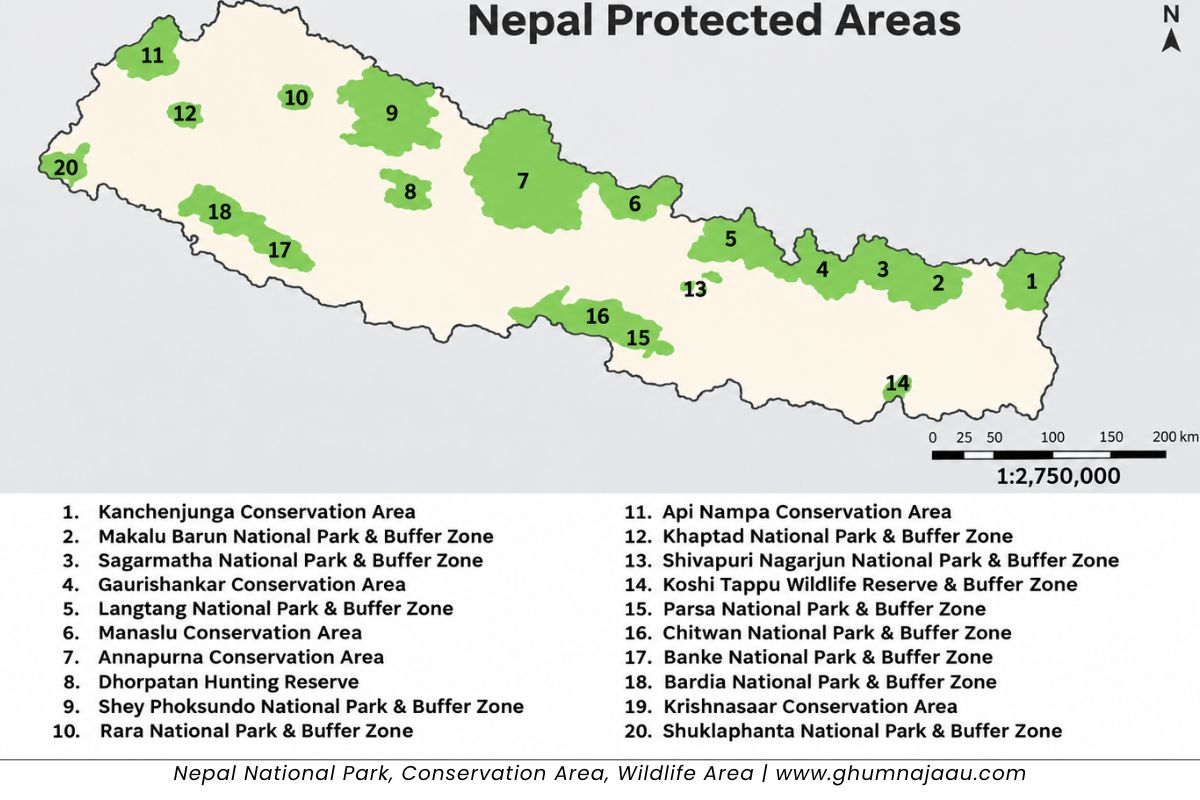
Nepal's mountains protect some of the Himalaya's most important habitats. Langtang, Sagarmatha and Makalu Barun are national parks. Annapurna, Manaslu and Kanchenjunga are conservation areas.
Wildlife viewing here usually happens on foot, during treks, quiet forest walks or specialist expeditions. Red pandas live in suitable mountain forests and snow leopards roam high Himalayan terrain. Both are elusive, and being in their region does not mean you will see them on a standard trek. Many trekkers instead enjoy Himalayan birds, langurs, deer and rich rhododendron forest.
If wildlife is your main goal, discuss the species, habitat, season and guiding needs before choosing a route. See trekking in Nepal, the Langtang region, the Makalu Barun region and our guide to trekking permits and fees.