Nepal Travel Guide: Best Places, Treks, Culture, Costs and Travel Tips

Nepal Travel Guide: Best Places, Treks, Culture, Costs and Travel Tips
Oct 16, 2026 Ghumnajaau Team
Everything you need to plan your Nepal trip: the best places to visit, popular treks, culture and traditions, travel costs, and practical tips from local travel experts.

Nepal brings the world's highest mountains, ancient heritage cities, peaceful lakes, traditional villages and tropical jungles into one small country. Whether you are planning a Himalayan trek, a family holiday, a cultural tour, a wildlife safari or an educational trip, Nepal has something for every interest and budget.

This Nepal travel guide covers the best places to visit, the best time to go, how many days you need, popular treks, culture, food, costs, visas and practical tips. Use it to plan a trip that fits your time, interests and budget.

Nepal Travel Guide: Quick Answers

  • Best time to visit: March to May and September to November for trekking and mountain views. December to February suits cultural tours and Terai wildlife.
  • How many days: 7 to 10 days for culture and nature; 14 days or more if you add a trek.
  • Visa: a tourist visa on arrival is available to most nationalities (USD 30 for 15 days, USD 50 for 30 days, USD 125 for 90 days). Confirm your eligibility with the Department of Immigration before you travel.
  • Best first-time route: Kathmandu, Pokhara, Chitwan and Lumbini.
  • Best beginner trek: Ghorepani Poon Hill (4 to 6 days).
  • Currency: Nepalese rupee (NPR). Carry cash for rural areas and trekking regions.
Nepal at a Glance

Nepal is a landlocked country in South Asia, between China to the north and India to the east, south and west. Despite its size, it ranges from the subtropical Terai plains through green mid-hills to the Himalayas, which means you can move from jungle to snow peaks within a single trip.

Travel information Details
Capital city Kathmandu
Official language Nepali
Currency Nepalese rupee (NPR)
Time zone Nepal Standard Time (UTC+5:45)
Highest mountain Mount Everest, 8,848.86 metres
Main regions Himalayas, mid-hills and Terai
Main international gateway Tribhuvan International Airport, Kathmandu
Electricity 230 V; plug types C, D and M
Popular experiences Trekking, culture, wildlife, adventure and pilgrimage

Nepal suits independent travellers, couples, families, student groups, nature lovers, cultural travellers and experienced mountaineers. Your ideal itinerary depends on the season, your time, fitness, budget and interests.

Best Time to Visit Nepal

The best time to visit Nepal depends on where you want to go and what you want to do. Spring and autumn are the most popular seasons for trekking and mountain views, but every season has something to offer if you choose your destinations well.

Season Months Best for Things to consider
Spring March to May Trekking, rhododendron blooms, sightseeing, wildlife Haze can reduce mountain views
Monsoon June to August Green landscapes, rain-shadow regions Rain, landslides, transport delays
Autumn September to November Clear mountain views, trekking, festivals Popular routes get busy
Winter December to February Cultural tours, wildlife, low-altitude hikes Cold nights, snow, high-altitude closures

Spring (March to May): An excellent season for Himalayan treks, village walks and cultural tours. Rhododendron forests add colour to many hill and mountain routes.

Monsoon (June to August): Rain turns the hills green, but roads, flights and trails can be disrupted. Rain-shadow regions such as Upper Mustang and parts of Dolpo can be good alternatives, subject to current access and weather.

Autumn (September to November): Traditionally Nepal's most popular season. Skies are often clearer, and Dashain and Tihar let you experience local celebrations. Monsoon conditions can sometimes linger into September.

Winter (December to February): A good time for Kathmandu Valley sightseeing, Terai wildlife tours, village experiences and selected low-altitude treks. Higher routes can be extremely cold or inaccessible.

Quick pick by interest

  • Everest, Annapurna and other high treks: March to May, October to November
  • Cultural tours and festivals: October to November, and winter for fewer crowds
  • Chitwan and Bardia wildlife: November to March
  • Monsoon travel: Upper Mustang, Dolpo and Kathmandu Valley with flexible plans

Conditions vary from year to year, so check current forecasts and trail conditions rather than relying on calendar dates alone.

Related Blog: Best Time to Visit Nepal: Month-by-Month Guide

Best Places to Visit in Nepal

Nepal offers destinations for almost every kind of traveller, from historic cities and sacred pilgrimage sites to remote mountain valleys and wildlife habitats.

Destinations Known for Sugested time
Kathmandu Valley Heritage, temples, culture 2 to 3 days
Pokhara Lakes, mountain views, adventure 2 to 3 days
Chitwan Wildlife and Tharu culture 2 to 3 days
Lumbini Birthplace of the Buddha 1 to 2 days
Everest region Everest Base Camp and Sherpa culture 12 to 14 days
Annapurna region Varied treks and mountain villages 4 to 18 days

Kathmandu Valley: Heritage, Temples and Traditional Architecture

Kathmandu Valley is the best starting point for a first visit. Explore the Durbar Squares of Kathmandu, Patan and Bhaktapur, along with Swayambhunath, Boudhanath and Pashupatinath. Together they show Nepal's traditional architecture, religious heritage, craftsmanship and lively urban culture. For sunrise views, nearby hill viewpoints such as Nagarkot and Dhulikhel make easy add-ons.

Best for: first-time visitors, cultural tours, families, students and heritage lovers.

Pokhara: Lakes, Mountain Views and Adventure

Pokhara is known for Phewa Lake, mountain scenery, caves, waterfalls, lakeside walks and adventure activities such as paragliding. It is also a main gateway to treks in the Annapurna region. From Kathmandu, it takes roughly 6 to 8 hours by road or about 25 minutes by flight, depending on conditions.

Best for: families, couples, adventure lovers and anyone wanting a relaxed holiday.

Chitwan: Wildlife and Jungle Experiences

Chitwan offers guided jungle activities, birdwatching and a chance to learn about Tharu culture. Chitwan National Park is known for protecting the greater one-horned rhinoceros and other wildlife.

Best for: families, nature lovers, wildlife photographers and educational groups.

Lumbini: The Birthplace of Gautama Buddha

Lumbini is a major Buddhist pilgrimage destination with the Maya Devi Temple, archaeological remains, monasteries and peaceful gardens. It offers historical, spiritual and educational experiences.

Best for: pilgrims, students, cultural travellers and history enthusiasts.

Janakpur: Mithila Culture and Religious Heritage

Janakpur is associated with the Ramayana tradition and Goddess Sita. Visit the magnificent Janaki Temple, see Mithila art and discover the distinctive traditions of the Mithila community.

Best for: cultural tours, pilgrimage, photography and educational trips.

Everest Region: Iconic Himalayan Landscapes

The Everest region combines dramatic mountain scenery, Sherpa culture, monasteries and famous routes including Everest Base Camp and Gokyo Lakes. High-altitude itineraries need proper acclimatisation and preparation.

Best for: trekkers, mountain lovers and experienced adventure travellers.

Annapurna Region: Mountain Villages and Scenic Treks

The Annapurna region offers varied landscapes, traditional villages and spectacular viewpoints. Popular options include Ghorepani Poon Hill, Khopra Ridge, Mardi Himal, Annapurna Base Camp and the Annapurna Circuit.

Best for: beginners (Poon Hill), experienced trekkers (Annapurna Base Camp and the Circuit), village walks and photographers.

Langtang Valley: Himalayan Scenery Near Kathmandu

Langtang offers mountain landscapes, Tamang culture, traditional settlements and rewarding trekking. It suits travellers who want a Himalayan journey closer to Kathmandu than the Everest region.

Best for: moderate trekkers with a week or so to spare.

Upper Mustang: A Distinctive Cultural Journey

Upper Mustang is known for arid landscapes, caves, traditional settlements and Tibetan-influenced heritage. It is a restricted area that requires special permits.

Best for: cultural trekkers and photographers, including monsoon travellers.

Rara Lake: Remote Natural Beauty

In northwestern Nepal, Rara is the country's largest lake. Forested surroundings, quiet landscapes and remoteness appeal to travellers who want a peaceful nature escape.

Best for: nature lovers and travellers seeking quiet, off-the-beaten-path places.

Shey Phoksundo and Dolpo: Remote Landscapes and Ancient Traditions

Phoksundo Lake is famous for its turquoise water and dramatic setting. The wider Dolpo region has remote villages and distinctive Bon and Buddhist traditions. Access and logistics need careful planning.

Best for: experienced trekkers and culture seekers.

Ghandruk: Traditional Gurung Village Life

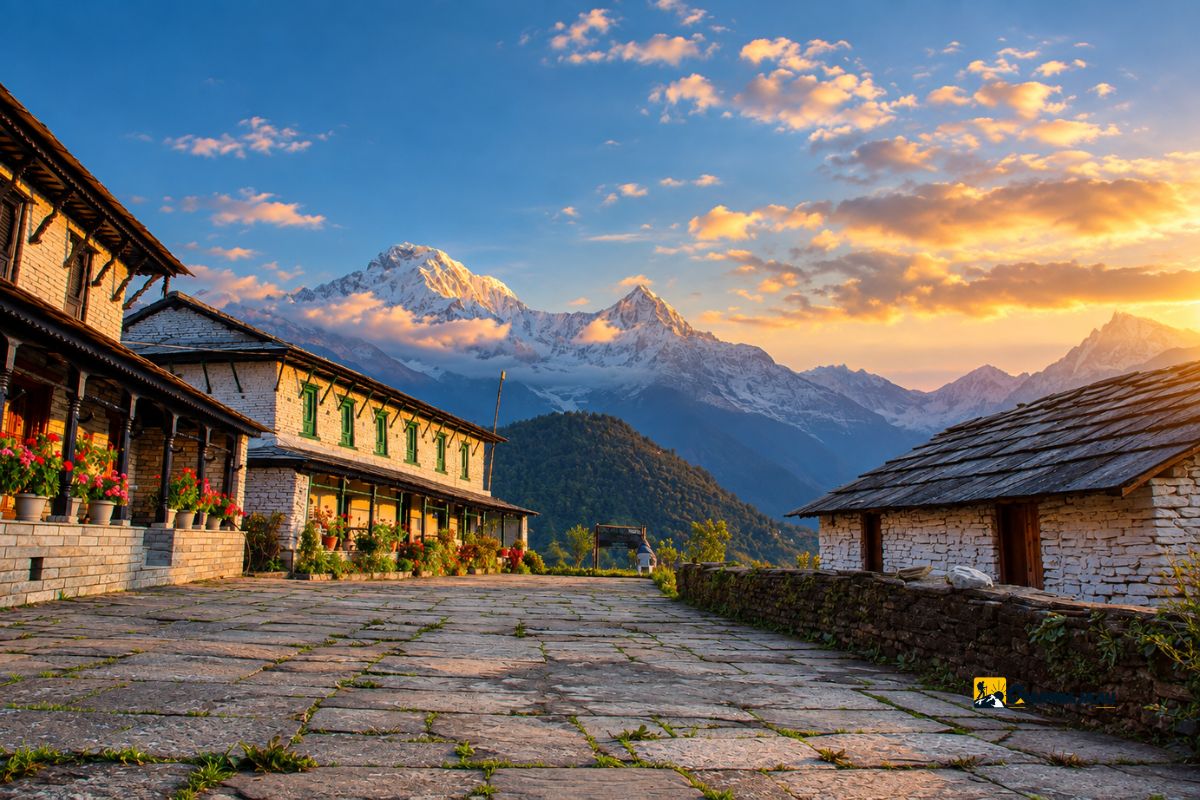
Ghandruk is known for stone-paved lanes, traditional homes, Gurung culture and views of Annapurna South, Hiunchuli and Machhapuchhre when skies are clear. It works well for village stays and short walks.

Best for: short village stays, families and cultural travellers.

Bandipur: Heritage and Slow Travel

Bandipur is a preserved hilltop town with traditional architecture, local culture, scenic surroundings and a slower pace.

Best for: slow travel, photography and a quiet break between Kathmandu and Pokhara.

Planning tip: do not try to cover every destination in one trip. Pick a realistic combination based on your arrival point, dates, available days and interests.

Related Blog: Best Places to Visit in Nepal: 10 Top Destinations
How Many Days Do You Need to Visit Nepal?

Your ideal trip length depends on whether you prefer cultural sightseeing, wildlife, a short trek or an extended Himalayan adventure.

Trip length Suggested plan Best for
5 to 7 days Kathmandu plus Pokhara or Chitwan First-time visitors with limited time
8 to 10 days Kathmandu, Pokhara and Chitwan, or add a short hike Culture and nature
11 to 14 days Several major destinations at a comfortable pace A balanced Nepal holiday
15 to 21 days Kathmandu plus a major trek Trekking enthusiasts
22 days or more Remote treks or several regions Experienced travellers

Sample Itineraries

7 days: Culture and Lakes. Days 1 to 3 in Kathmandu Valley (Durbar Squares, Swayambhunath, Boudhanath, Pashupatinath), Days 4 to 6 in Pokhara (Phewa Lake, sunrise viewpoint, optional paragliding), Day 7 departure.

10 days: Culture, Lakes and Wildlife. Days 1 to 3 in Kathmandu Valley, Days 4 to 6 in Pokhara, Days 7 to 9 in Chitwan National Park (jungle activities, Tharu culture), Day 10 departure.

14 days: Heritage Plus a Short Trek: Days 1 to 3 in Kathmandu Valley, Days 4 to 9 for the Ghorepani Poon Hill trek from Pokhara, Days 10 to 12 in Chitwan or Lumbini, Days 13 to 14 buffer and departure.

These are planning examples, not fixed itineraries. Road travel and domestic flights can be affected by traffic, weather and local conditions. If you are trekking, keep a spare day before your international departure.

Want a plan built around your dates and interests? Request a custom itinerary from Ghumnajaau.

Related Blog: Nepal Itinerary: 7, 10 & 14-Day Travel Plans

Cultural Tours and Sightseeing in Nepal

You do not need to trek to experience Nepal. Cultural tours give you a way into the country's history, religion, architecture, crafts and everyday life.

Popular experiences include:

  • Exploring the historic cities of Kathmandu, Patan and Bhaktapur
  • Visiting temples, stupas and monasteries with a knowledgeable local guide
  • Discovering Mithila art and religious heritage in Janakpur
  • Learning about Buddhist heritage in Lumbini
  • Staying in traditional villages and enjoying local hospitality
  • Exploring Pokhara's lakeside and nearby viewpoints
  • Combining geography, biodiversity, history and community learning on educational tours

For schools and colleges, educational tours connect classroom learning with real experiences across Nepal's Terai, hills and mountains. A well-planned itinerary balances learning activities, sightseeing, travel time, accommodation and student safety.

Trekking in Nepal: Popular Routes and Regions

Trekking is one of the most rewarding ways to experience Nepal. Trails pass through forests, terraced fields, mountain villages, suspension bridges, alpine landscapes and high Himalayan viewpoints.

Trek Typical duration Difficulty Main highlights
Ghorepani Poon Hill 4 to 6 days Easy to moderate Sunrise views, village culture
Langtang Valley 7 to 9 days Moderate Mountain scenery, Tamang culture
Annapurna Base Camp 7 to 12 days Moderate to challenging Annapurna Sanctuary
Everest Base Camp 12 to 14 days Challenging Everest region, Sherpa villages
Gokyo Lakes 12 to 14 days Challenging High-altitude lakes, mountain views
Annapurna Circuit 12 to 18 days Challenging Changing landscapes, high mountain pass
Manaslu Circuit 12 to 16 days Challenging Remote settlements, Himalayan scenery
Upper Mustang 10 to 14 days Moderate, depending on itinerary Arid landscapes, cultural heritage

Duration and difficulty vary with route, starting point, pace, acclimatisation days and current trail conditions.

How to Choose the Right Trek

  • First-time trekkers: start with a lower-altitude route such as Ghorepani Poon Hill.
  • Short holiday: consider shorter Annapurna-region treks or village walks.
  • Himalayan adventure: consider Langtang Valley or Annapurna Base Camp once you have checked your fitness and time.
  • High-altitude challenge: Everest Base Camp, Gokyo Lakes and the Annapurna Circuit need careful preparation.
  • Remote cultural experience: Manaslu and Upper Mustang need extra logistics and permit planning.

Permits and Guide Requirements

Permit needs depend on the route. Depending on where you trek, you may need a TIMS card, a conservation area or national park permit (for example, for Annapurna, Sagarmatha or Langtang), or a local permit. Restricted areas such as Upper Mustang, Manaslu and Dolpo require special permits and a licensed guide arranged through a registered trekking agency, and some have minimum group-size rules. Fees and regulations change, so confirm current requirements with your operator (check the  Nepal Trekking Permits Guide and the Nepal Tourism Board before booking.

Before You Trek

Prepare suitable equipment, build in acclimatisation days and arrange insurance that covers your planned altitude and activities, including helicopter evacuation where relevant.

Mountaineering and Adventure Activities

Nepal is world-famous for Himalayan climbing, with expeditions to Mount Everest, Lhotse, Makalu, Kanchenjunga, Manaslu, Dhaulagiri and Annapurna, as well as technical peaks such as Ama Dablam.

Mountaineering is very different from trekking. It can demand technical climbing skills, previous high-altitude experience, specialist equipment, permits, experienced guides and detailed emergency planning. Assess your experience honestly before choosing an expedition.

Other Adventure Activities

Depending on destination and season, you can try:

Before booking any activity, check the provider's qualifications, safety equipment, insurance arrangements and emergency procedures.

Wildlife and National Parks in Nepal

Nepal's range of elevations and habitats supports tropical forests, wetlands, temperate woodlands and alpine ecosystems.

Chitwan National Park and Bardia National Park are well known for conservation and wildlife experiences. Depending on location and conditions, visitors may see rhinoceroses, deer, birds, reptiles and, more rarely, tigers. Sagarmatha National Park protects important Himalayan landscapes, and Langtang National Park includes forests, mountain ecosystems and diverse wildlife.

Choose responsible operators, follow park rules, keep a safe distance from animals and avoid activities that disturb wildlife. Sightings cannot be guaranteed.

Major Festivals and Traditional Nepali Food

Festivals Worth Experiencing

Nepal's festivals bring communities together through worship, music, dance, family gatherings and food.

  • Dashain: a major festival of family reunions, blessings, tika and jamara.
  • Tihar: the festival of lights, with lamps, decorations and Bhai Tika.
  • Holi: the festival of colours, celebrated through community gatherings.
  • Teej: observed by many Hindu women through prayer, music and dance.
  • Buddha Jayanti: celebrates Gautama Buddha and his significance in Buddhist traditions.
  • Indra Jatra: a major Kathmandu festival with traditional processions and performances.
  • Chhath: particularly important in the Terai, with prayers and offerings to the Sun.
  • Losar: New Year celebrations observed by Himalayan communities, including Sherpa, Tamang, and Gurung communities, each in their own tradition.
  • Maghe Sankranti: A major festival for the Magar and Tharu communities, also celebrated as a seasonal festival across Nepal, marking the sun’s transition into a new phase and the beginning of warmer days.

Festival dates change every year, so confirm them for your travel period.


Food You Should Try in Nepal

Nepali cuisine reflects the country's geography, agriculture and cultural diversity.

  • Dal bhat: rice, lentil soup, vegetables and side dishes.
  • Momo: dumplings filled with vegetables or meat.
  • Thukpa: a warming noodle soup from Himalayan food traditions.
  • Sel roti: a ring-shaped rice bread often made for festivals.
  • Gundruk: fermented leafy greens used in traditional meals.
  • Dhido: a traditional flour-based staple served with vegetables or soup.
  • Newari cuisine: regional specialities such as bara, yomari and chatamari.
  • Thakali thali: rice, dal, vegetables, pickles and regional specialities.
  • Tharu cuisine: food traditions of the Terai communities.
  • Juju dhau: a traditional yoghurt associated with Bhaktapur.

Trying regional food is a simple way to learn about local culture. Choose hygienic places to eat, drink treated water and state any dietary requirements clearly.

Nepali Culture, Religion and Local Communities

Nepal is home to diverse ethnic, caste, Indigenous and linguistic communities. Its cultural heritage includes traditional architecture, festivals, crafts, music, food, religious practice and community life.

The 2021 National Population and Housing Census recorded 142 caste and ethnic groups and 124 mother tongues, highlighting the country’s diversity.

Hinduism, Buddhism, Kirat traditions, Indigenous spiritual practices, Islam, Christianity and other faiths all shape Nepal's religious landscape. Sacred places such as Pashupatinath, Boudhanath, Swayambhunath, Lumbini, Janaki Temple and Muktinath reflect different parts of this heritage.

You can learn about local life through village visits, community homestays, museums, food experiences and locally guided cultural tours.

Cultural Etiquette for Visitors

  • Greet people with "Namaste."
  • Remove shoes where required before entering homes or religious buildings.
  • Dress respectfully at temples and monasteries.
  • Ask permission before photographing people or ceremonies.
  • Follow local instructions at sacred sites.
  • Do not touch religious objects without permission.
  • Respect local customs and community traditions.

Practices vary by place and community, so follow local guidance rather than assuming every custom applies everywhere.

How Much Does a Trip to Nepal Cost?

The cost of a Nepal trip depends on your accommodation, transport, season, group size, activities and itinerary. A simple independent trip costs far less than a private guided tour or a high-altitude expedition.

Indicative Daily Budget (per person, excluding international flights)

Travel style Approximate daily budget What it usually covers
Budget USD 30 to 50 Guesthouses, local meals, public or tourist transport
Mid-range USD 70 to 150 Standard or boutique hotels, a mix of restaurants, private transfers on some days
Comfortable USD 150 and above Upscale hotels, private vehicle and guide, domestic flights

These figures are general estimates for planning only (October 2026). Actual prices vary by season, group size and itinerary, so request a written quotation for your trip.

What Affects Your Budget

Budget category Main cost factors
Accommodation Guesthouses, standard hotels, boutique hotels or trekking lodges
Transport Local transport, tourist buses, private vehicles, domestic flights
Food Local meals, hotel restaurants, special dietary needs
Sightseeing Heritage entrance fees, guides, activities
Trekking Guides, porters, permits, lodging and trail meals
Adventure Activity fees, specialist equipment, qualified instructors
Insurance Medical cover, trekking altitude and evacuation benefits
Other Visa, tips, shopping and unexpected delays

How to plan your budget: decide which destinations you want, choose your accommodation level, identify required permits and activities, and ask for a written quotation that clearly lists inclusions and exclusions.

For trekking, do not compare packages on price alone. Check guide and porter arrangements, transport, accommodation, meals, safety support and emergency procedures.

Related Blog: How Much Does a Trip to Nepal Cost? (2026–27 Budget Guide)

Essential Nepal Travel Tips

Visa and Entry Requirements

Many foreign visitors can get a tourist visa on arrival, but eligibility depends on nationality and current immigration rules. The Department of Immigration lists standard tourist visa fees of USD 30 for 15 days, USD 50 for 30 days and USD 125 for 90 days. Some nationalities and categories have different arrangements or exemptions (for example, Indian citizens do not need a visa). An online pre-arrival application form is also available, which can save time at the airport. Always confirm current requirements on the official Department of Immigration website before you travel: https://www.immigration.gov.np/visa-information

Money and Payments

Nepal's currency is the Nepalese rupee (NPR). Cards and ATMs are available in many urban areas, but cash is still essential in smaller towns, rural areas and trekking regions.

Transport

Domestic flights, tourist buses, private vehicles and local transport connect the main destinations. Road journeys often take longer than expected because of traffic, roadworks, weather and local conditions, so keep a flexible schedule, especially around international flights.

Packing

Pack for your itinerary and elevation. Depending on the season, you may need warm layers, rain protection, comfortable walking shoes, sun protection and a reusable water bottle.

Health, Safety and Altitude

Allow enough time to acclimatise on high-altitude journeys. Learn the symptoms of altitude sickness and seek medical help if symptoms appear or worsen. Choose activities that suit your ability and use qualified guides where appropriate.

Arrange travel insurance that specifically covers your planned activities, maximum trekking altitude and emergency evacuation if needed.

Connectivity and Responsible Travel

Mobile and internet coverage varies by region, and remote trekking routes may have limited connectivity.

Reduce single-use plastic, carry out your waste, respect wildlife, support local businesses, and follow local community customs. Responsible travel helps protect the natural and cultural heritage that makes Nepal special.

Related Blog: Nepal Travel Tips: Visa, Budget, Safety & Packing

How to Choose a Reliable Tour Operator in Nepal

A reliable operator makes your trip smoother, especially when it involves trekking, remote destinations, educational tours or adventure activities. Before booking, check:

  1. Registration and licences: confirm the operator is properly registered and authorised for the services offered.
  2. A clear itinerary: route, duration, accommodation, meals, transport and activities.
  3. Transparent pricing: written inclusions, exclusions, permit fees and cancellation terms.
  4. Qualified staff: guide experience, training and relevant qualifications.
  5. Safety arrangements: first aid, emergency communication, altitude management and evacuation procedures.
  6. Insurance: what is included and what you must arrange yourself.
  7. Responsible tourism: respect for communities, cultural heritage and the environment.
  8. Recent reviews: feedback from travellers who booked similar trips.
  9. Reliable communication: a way to reach the operator before and during your journey.
  10. Written confirmation: keep the final itinerary, payment terms and booking confirmation.

The lowest quotation is not always the best value. Compare what you receive in services and safety for the price.

Frequently Asked Questions About Travelling in Nepal

What is the best time to visit Nepal?

Spring (March to May) and autumn (September to November) are the most popular seasons for trekking and mountain views. Winter suits many cultural tours and Terai wildlife trips, and selected rain-shadow destinations can work during the monsoon.

How many days are enough to visit Nepal?

Five to seven days covers Kathmandu and one other major destination. Eight to ten days allows Kathmandu, Pokhara and Chitwan, and 11 to 14 days gives a broader mix of culture, nature and a short walk. Major treks and expeditions need more time.

Is Nepal suitable for family holidays?

Yes. Families can enjoy heritage sightseeing, wildlife experiences, village visits, scenic drives and easy walks. Choose age-appropriate activities, comfortable travel times and suitable accommodation.

Can beginners go trekking in Nepal?

Yes. Lower-altitude routes such as Ghorepani Poon Hill suit beginners with reasonable fitness. Difficulty depends on walking hours, elevation gain, altitude and trail conditions.

Do I need a guide for trekking in Nepal?

It depends on the route. Restricted areas such as Upper Mustang, Manaslu and Dolpo require a licensed guide arranged through a registered trekking agency, plus special permits. For other routes, requirements and permits can change, so confirm current rules with your operator or the Nepal Tourism Board before booking.

Is Nepal expensive for tourists?

Costs depend on your travel style. Simple accommodation, local meals and public or tourist transport keep costs down, while private vehicles, domestic flights, guided treks and expeditions raise the budget.

Is Nepal safe for visitors?

Many travellers visit Nepal without serious problems, but plan for road conditions, changing weather, altitude, wildlife and adventure-activity risks. Follow local advice and carry suitable travel insurance.

Can I experience Nepal without trekking?

Absolutely. Kathmandu Valley, Pokhara, Chitwan, Lumbini, Janakpur and traditional villages offer cultural, historical, spiritual and nature experiences without a mountain trek.

What should I eat in Nepal?

Try dal bhat, momo, thukpa, sel roti, gundruk, Newari specialities and Thakali thali. Regional dishes differ, which makes food a big part of exploring the country.

How can I plan a Nepal tour with Ghumnajaau?

Share your travel dates, group size, interests, preferred destinations and budget with Ghumnajaau. The team can suggest options for cultural tours, family holidays, educational trips, wildlife experiences and trekking.

Plan Your Nepal Trip with Ghumnajaau

From the Terai plains and green hills to the Himalayas, Nepal offers far more than one kind of trip. You can explore historic cities, sacred pilgrimage sites, peaceful lakes, traditional villages, wildlife habitats and spectacular mountain trails.

At Ghumnajaau, we plan tours, cultural journeys, trekking adventures, wildlife experiences and educational trips that match your interests, available time, budget and travel style.

Whether you are planning a family holiday, a student educational tour, a cultural journey or your next Himalayan adventure, start with a plan that gives you enough time to experience Nepal properly.

Ready to discover Nepal? Let's plan your journey together. 

  • Website: www.ghumnajaau.com 
  • Email: info@ghumnajaau.com
  • Phone / WhatsApp: +977-9851333595 

Ghumnajaau: Explore Nepal Together.

Plan Your Trip with Ghumnajaau

This data will only be used by our team to contact you and no other purpose.