Nepal is usually divided into three east-west belts: the Terai in the south, the hills in the middle and the Himalayas in the north. These are broad categories, and individual valleys have their own local conditions.
|
Region
|
Typical elevation
|
Landscape
|
Example destinations
|
Typical travel experiences
|
|
Terai
|
About 60–300 m
|
Flat plains, grasslands, riverine forest
|
Chitwan, Bardia, Lumbini, Janakpur
|
Wildlife safaris, birdwatching, Buddhist and Hindu heritage
|
|
Hills
|
About 300–3,000 m
|
Valleys, terraced farmland, forested ridges, historic towns
|
Kathmandu Valley, Pokhara, Bandipur, Tansen
|
Heritage tours, village stays, day hikes, short treks
|
|
Himalayas
|
Above about 3,000 m
|
High mountains, glaciers, alpine valleys
|
Everest, Annapurna, Langtang, Manaslu
|
Trekking, mountain photography, climbing
|
The hills cover the largest share of the country, and the three belts differ so much in climate that a single trip can include very different weather.
Terai: Plains, Wildlife and Pilgrimage Sites
The Terai is the southern lowland strip along the Indian border. It is warm, humid and green, with grasslands, sal forest and wide rivers.
Chitwan and Bardia national parks are Nepal's best-known wildlife destinations, home to species such as the one-horned rhinoceros and Bengal tiger. Lumbini, the birthplace of the Buddha, draws Buddhist pilgrims from around the world, and Janakpur is a major Hindu pilgrimage town known for its Maithili culture.
The Terai is hot in the pre-monsoon months and humid in summer. Plan safaris and walks for early morning and late afternoon, and remember that wildlife sightings are never guaranteed.
Hills: Heritage, Valleys and Village Life
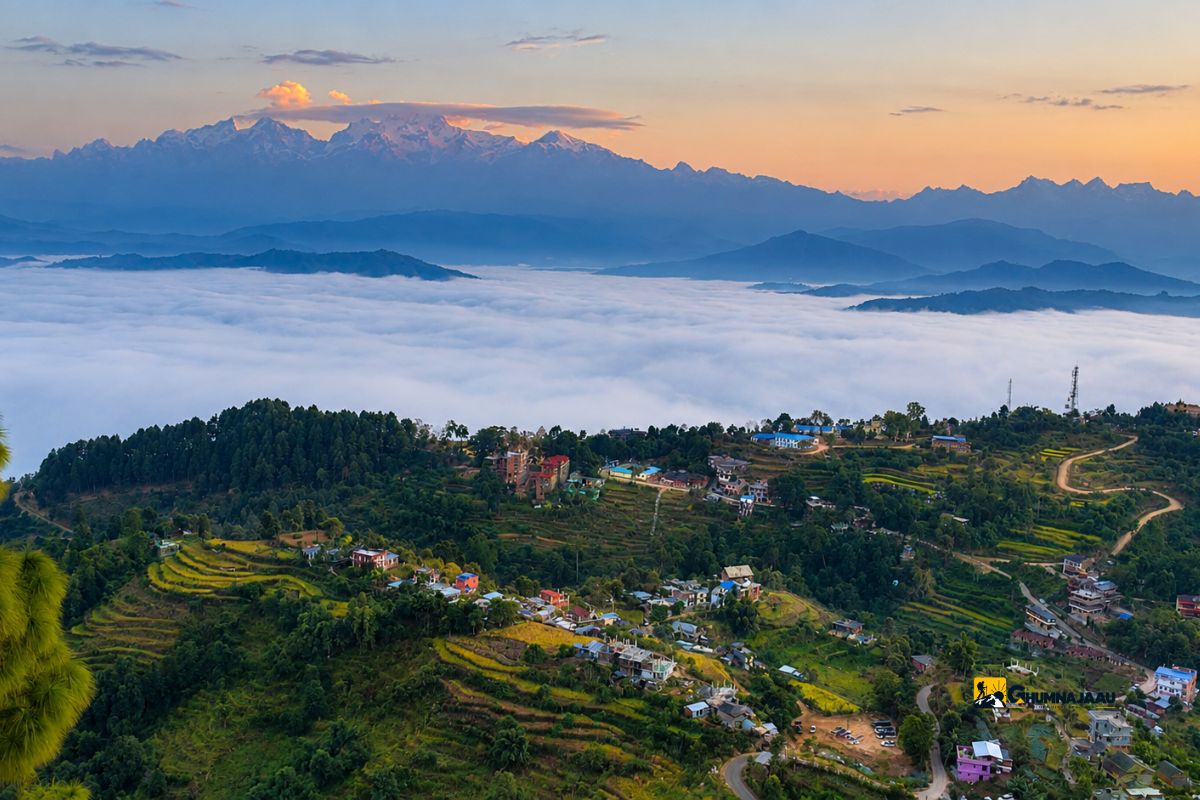
The hill region is the cultural heart of Nepal. It holds Kathmandu Valley, with its temples, stupas and historic royal squares, and Pokhara, a lakeside city at about 800 m with views of the Annapurna range. Smaller towns such as Bandipur and Tansen suit travelers who prefer a slower pace and local culture.
The climate here is generally mild, which makes the hills comfortable for much of the year. But lower altitude does not always mean easy walking. Village trails often involve steep climbs and long stone staircases, so check the daily ascent of any walk you plan.
Himalayas: Mountains and High-Altitude Adventure
Northern Nepal contains eight of the world's fourteen peaks above 8,000 m, including Everest, Kanchenjunga, Lhotse, Makalu, Dhaulagiri, Manaslu, Cho Oyu and Annapurna I. Routes range from well-established teahouse treks in the Everest, Annapurna and Langtang regions to remote journeys that need camping support and longer preparation.
The elevations involved are significant. Namche Bazaar is at about 3,440 m, Everest Base Camp at about 5,364 m, and Thorong La Pass on the Annapurna Circuit at about 5,416 m.
Choose a trek by its daily walking time, sleeping elevations, acclimatisation schedule and access, not by scenery alone. Two treks of the same length can differ greatly in difficulty. Nepal Trekking Permits & Fees.